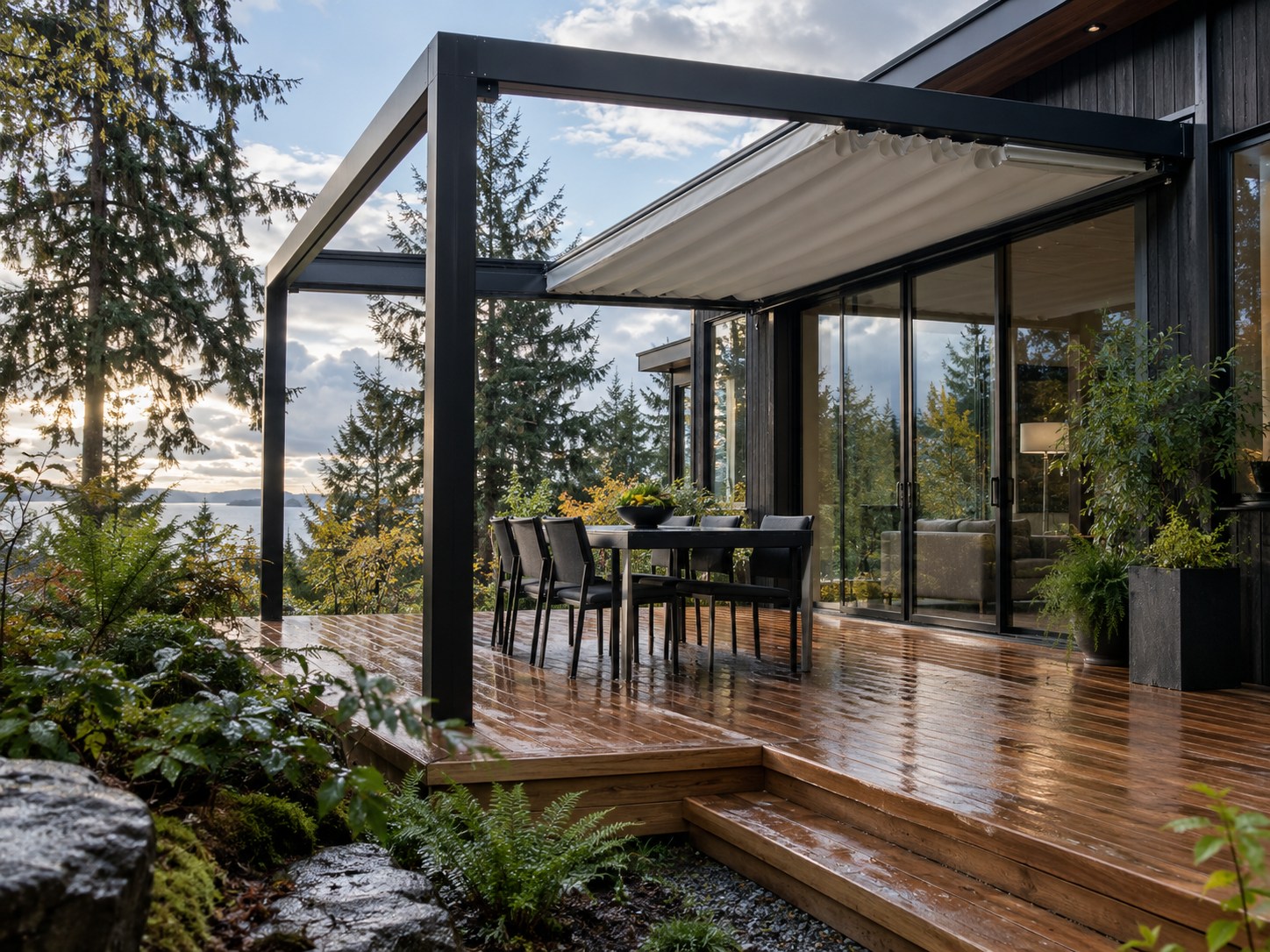
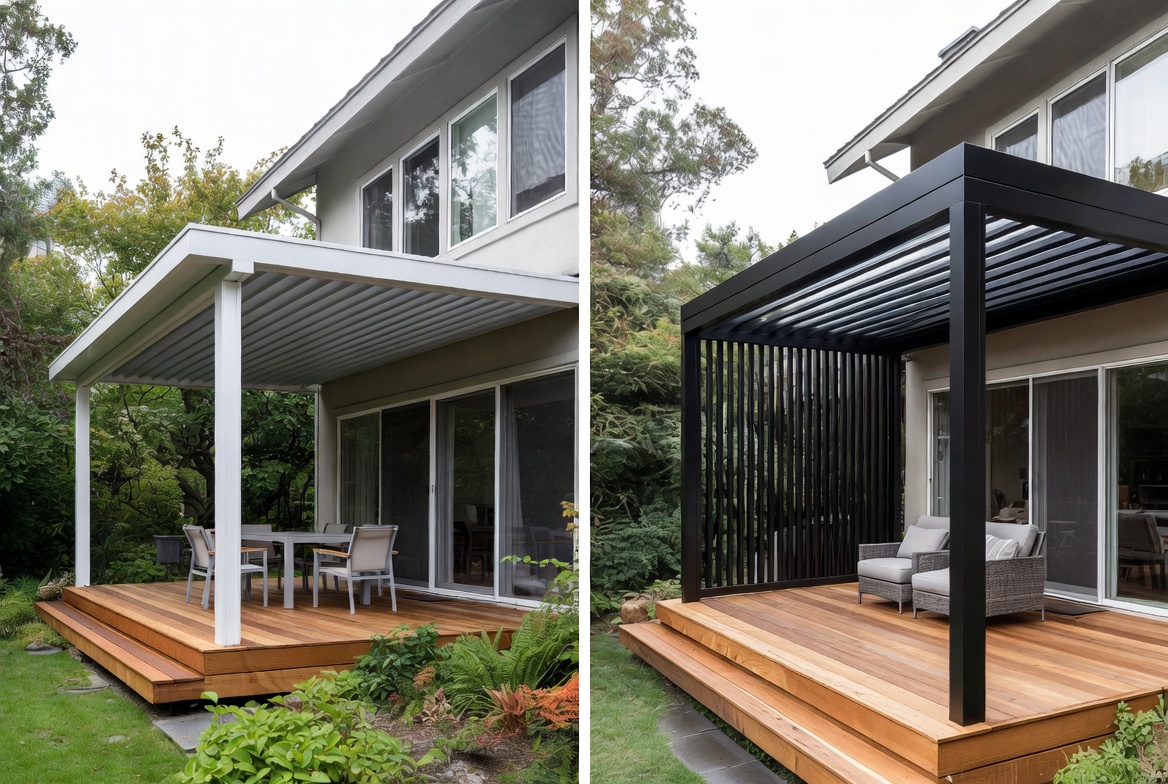
One of the things that separates a louvered pergola from a basic patio cover is what you can do with it beyond the structure itself.
The adjustable roof system is the foundation. But for most homeowners, it’s the additions that turn a covered outdoor space into something they actually use every day — in the evening, in October, when guests are over, when it’s raining sideways.
Here’s a clear look at what’s available, what each addition actually does, and how to think about what makes sense for your specific space.
Integrated LED Lighting
Lighting is the most common addition to a louvered pergola — and for good reason. It’s the one that most directly extends how late into the evening and how far into the year you use the space.
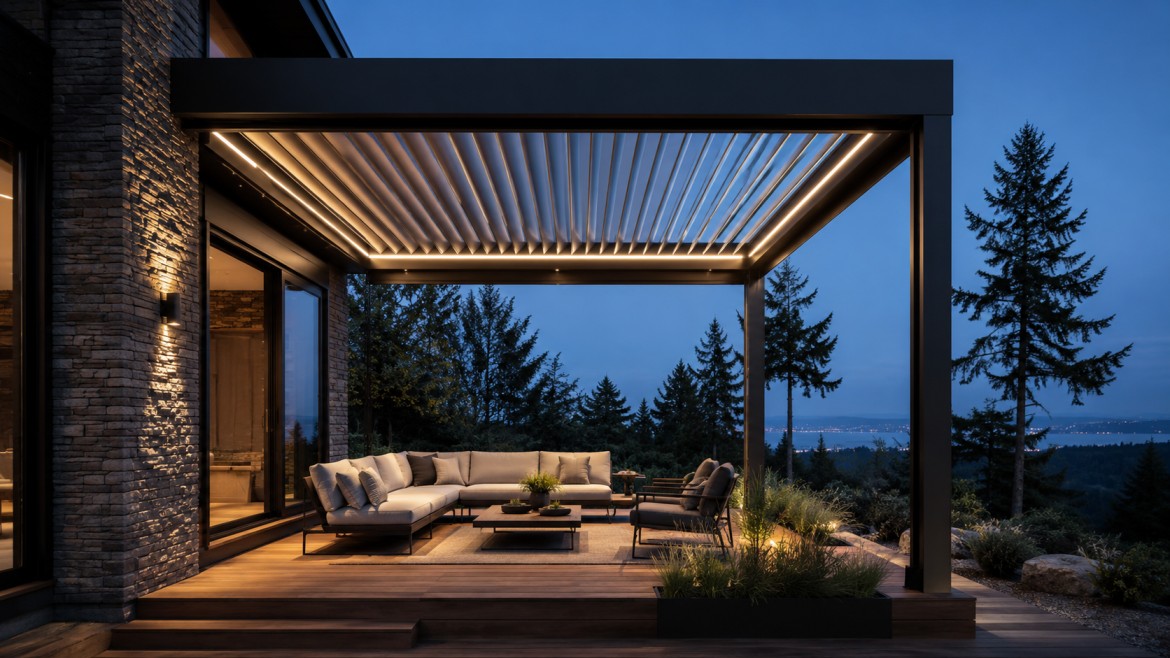
With a louvered pergola, lighting is built into the structure itself — typically recessed into the frame or the louvers — rather than added on as an afterthought. That means no exposed wires, no clip-on fixtures, no extension cords running across the deck. The result looks intentional and clean.
What this changes about how you use the space:
Without lighting, a covered outdoor area is effectively off after dark. With integrated LED lighting, it becomes a usable room in the evening — for dinner, for entertaining, for sitting outside after the kids go to bed. On Vancouver Island where summer evenings are long and mild, that’s a significant amount of usable time.
Most systems offer dimmable options, which lets you set the mood depending on whether you’re hosting or just relaxing. Some integrate with smart home systems for full control from your phone.
Motorized Privacy Screens
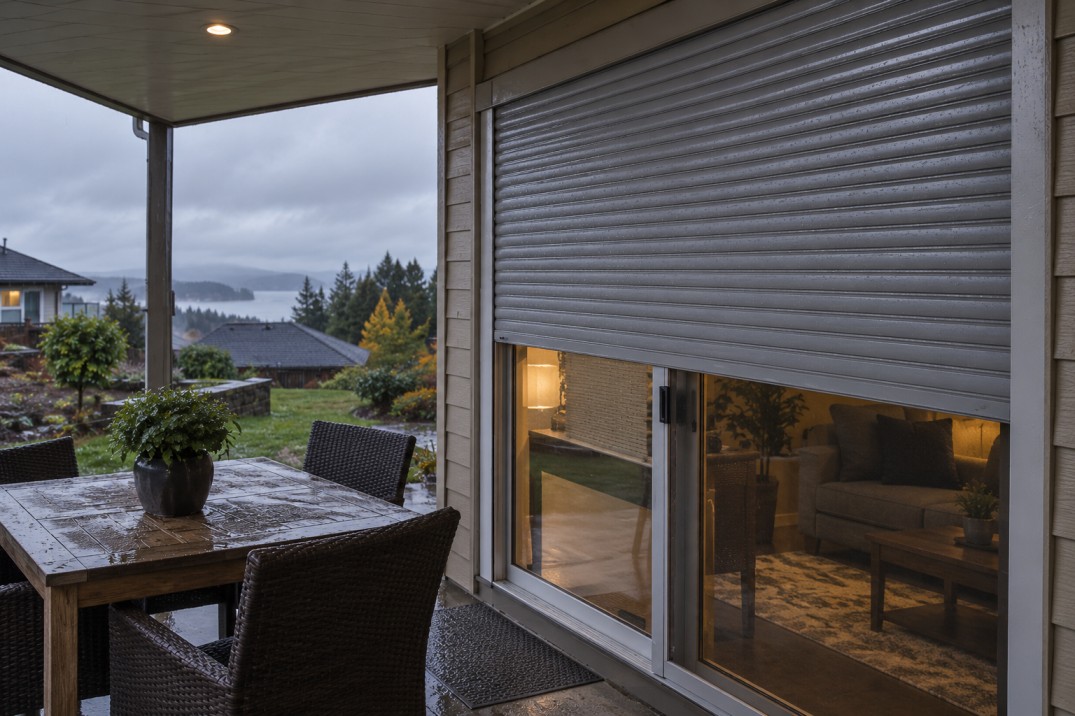
Privacy screens attach to the sides of the pergola and can be raised or lowered as needed. Most quality systems are motorized, meaning you control them the same way you control the louvers — with a remote, a wall switch, or a phone app.
What screens actually do:
The obvious answer is privacy — blocking sightlines from neighbours, the street, or adjacent properties. But on Vancouver Island, screens serve an equally important function as weather barriers. A closed screen on the windward side of a pergola changes the experience inside it dramatically on a blustery fall day. Combined with a closed louvered roof, screens can make an outdoor space feel genuinely sheltered even in poor conditions.
They also help with bugs in summer, which is a more practical benefit than it might sound if you’ve tried to eat outside on a warm August evening near any trees.
Screens come in a range of opacities — from sheer mesh that filters light and provides airflow to near-solid panels for full privacy and wind protection. Most homeowners choose a combination depending on which sides of the pergola need the most coverage.
Infrared Heaters
Heaters are what take a louvered pergola from a three-season space to something usable almost year-round on Vancouver Island.
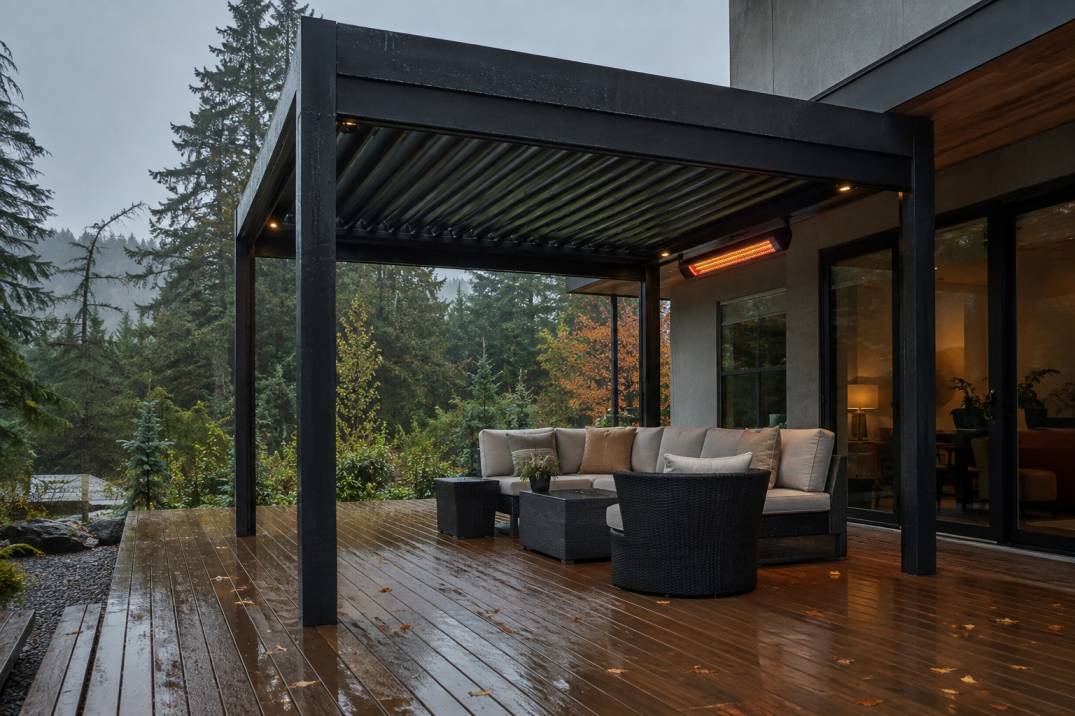
Infrared heaters are the standard choice for pergola integration — they heat objects and people directly rather than trying to heat the air around them, which makes them far more effective in an open or partially open outdoor environment. You feel the warmth immediately when you step under them, even if the louvers are partially open.
They mount cleanly into the pergola frame overhead, keeping the space visually uncluttered.
What this changes about how you use the space:
Without heat, most outdoor spaces on Vancouver Island go largely unused from October through April. With a good infrared heater system, you extend genuine usability well into the cooler months. For homeowners who entertain regularly, or who simply want to use their outdoor space more than a few months a year, this is often the addition with the biggest practical impact.
Most systems are electric and can be integrated into the same control system as your lighting and screens.
Ceiling Fans
Ceiling fans serve two purposes depending on the season.
In summer, they move air and make a covered outdoor space significantly more comfortable on warm days — especially on Vancouver Island where summer temperatures can climb and a covered space without airflow can feel stuffy.
In cooler months, running a ceiling fan on low helps circulate warm air from a heater more evenly through the space, making the heating more efficient.
Like lighting and heaters, fans designed for pergola integration mount into the frame cleanly and are rated for outdoor use — meaning they handle the moisture and temperature cycling of a coastal BC climate without deteriorating quickly.
Sensors and Automation
Higher-end louvered pergola systems can be fitted with weather sensors that automate how the structure responds to conditions.
The most common application is a rain sensor that automatically closes the louvers when it detects precipitation — useful if you’re away from home or simply don’t want to think about it. Wind sensors work similarly, closing the louvers when gusts exceed a set threshold.
Some systems integrate with smart home platforms, allowing you to control everything — louvers, lighting, screens, heaters — from a single app or voice control.
For most homeowners this level of automation is a premium addition rather than a necessity. But for the right person — someone who travels frequently, has a complex setup, or simply values convenience — it adds a layer of functionality that’s hard to replicate any other way.
How to Think About Which Additions Make Sense
Not every space needs every feature. Here’s a straightforward way to think about it:
Start with how you actually use your outdoor space.
If you entertain regularly in the evenings, lighting is non-negotiable. If you want to use the space in cooler months, heaters matter more than screens. If privacy is your main concern, screens become the priority.
Think about the seasons you want to use the space.
Vancouver Island’s climate means rain and mild temperatures for much of the year. The additions that extend seasonal usability — heaters, screens, quality drainage — tend to deliver the most practical value here specifically.
Consider the long-term picture.
Adding features during the initial installation is almost always cleaner and less expensive than retrofitting them later. If there’s a feature you think you’ll want eventually, it’s usually worth including it from the start.
For a look at how louvered pergolas perform in Vancouver Island conditions generally, this post on rain and wind performance is worth reading. And if you’re still deciding between a louvered pergola and a patio cover, this comparison post walks through the key differences.
Budget realistically.
Features add cost. If you’re working within a set budget, prioritize the additions that will change how you use the space most — usually lighting first, then heaters, then screens. For a full picture of what louvered pergolas cost on Vancouver Island with and without additions, our pricing guide covers it in detail.
See What’s Possible
The best way to understand what a fully built-out louvered pergola looks like is to see completed examples. Our project gallery shows real installs across Vancouver Island homes — including setups with lighting, screens, and heating.
Ready to Start Planning?
If you’re thinking about a louvered pergola and want to understand which additions make sense for your space, Aspire Pergolas can walk you through the options and help you build something that actually fits how you live.