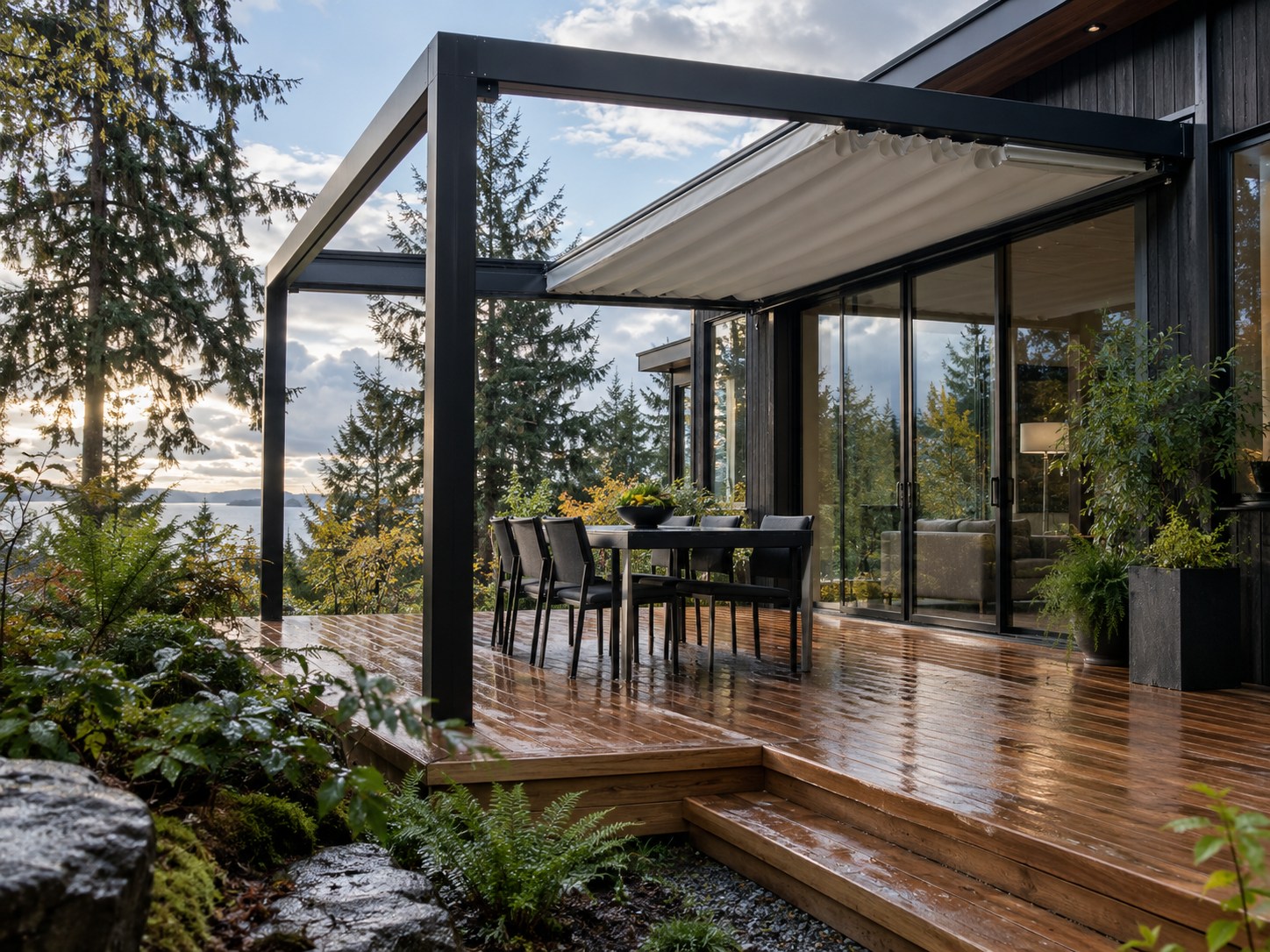
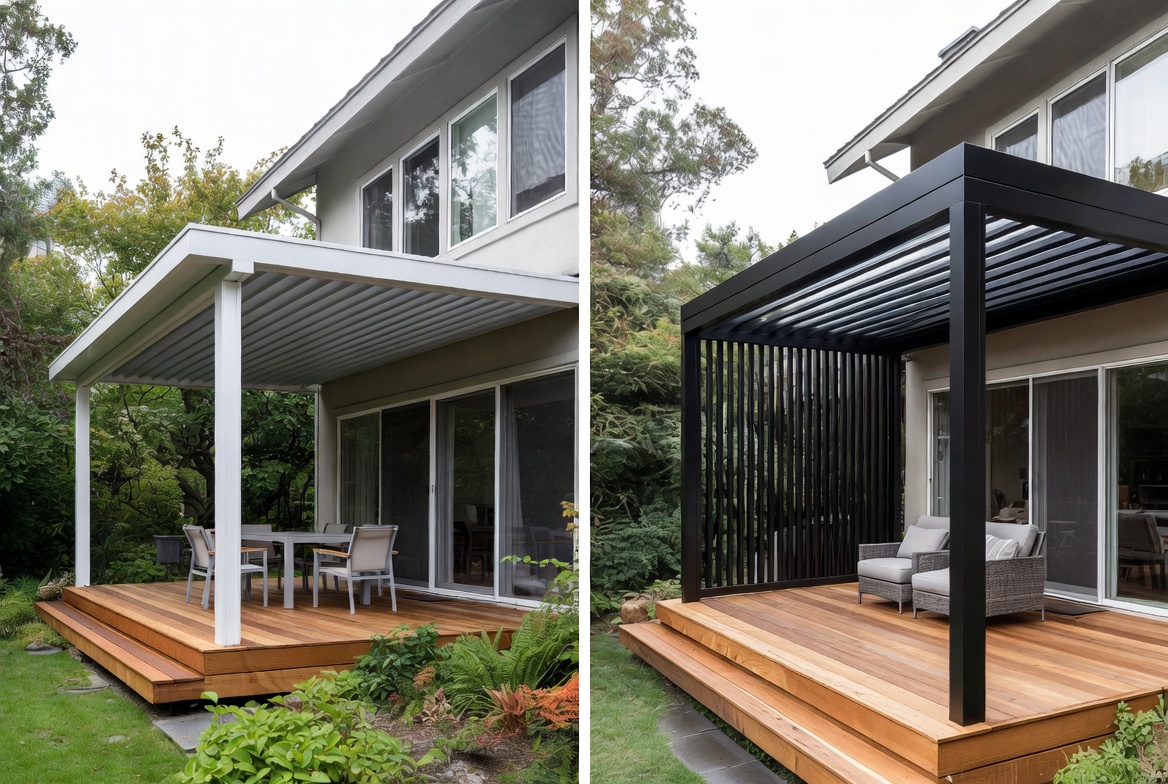
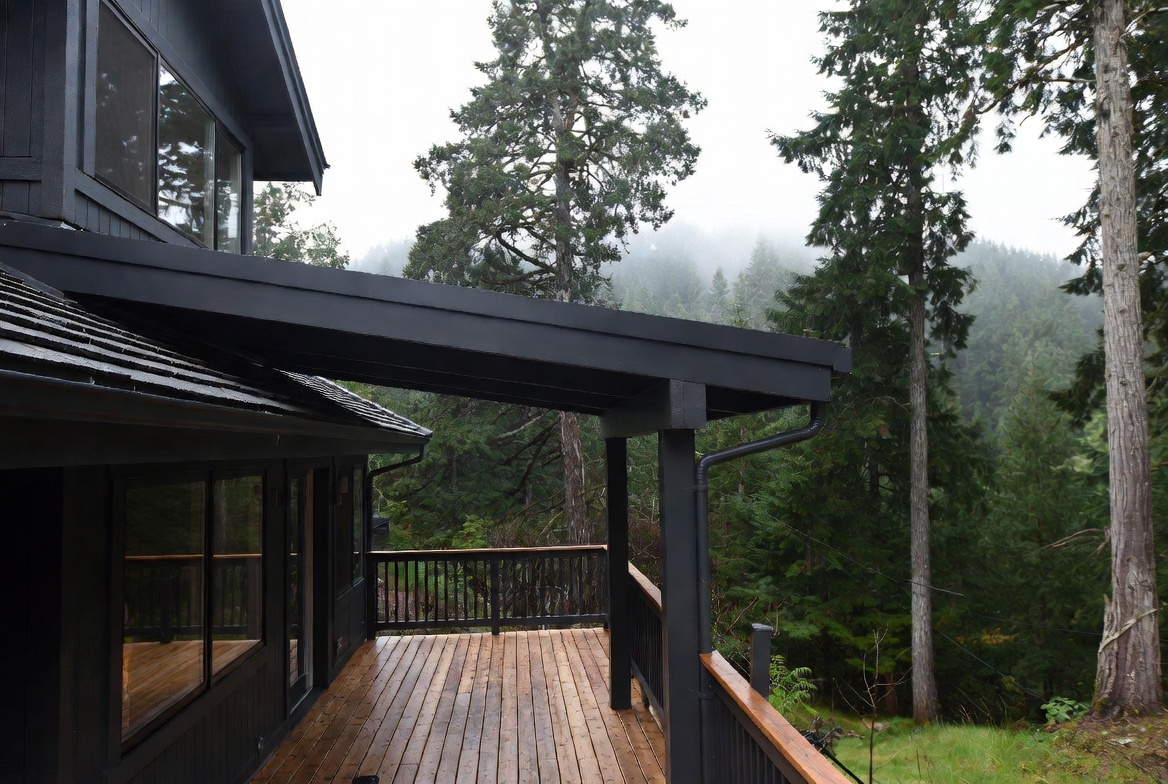
Vancouver Island doesn’t really have a harsh winter — but it has a wet one. Between October and February, we get the bulk of our annual rainfall, regular windstorms blowing in off the Strait, and the occasional atmospheric river that dumps more rain in a weekend than some cities see in a month. If you’ve got a patio cover or louvered pergola, a bit of seasonal prep in the fall goes a long way toward keeping it working well and looking good through to spring.
Here’s what we tell Aspire clients to check before the weather turns.
1. Clear the Gutters and Drainage Channels
Most patio covers and louvered pergolas we install have an integrated gutter system that channels rainwater off the roof and down through the posts. It works great — as long as it’s clear. Fir needles, maple leaves, and general debris build up fast on Vancouver Island in the fall, and a clogged channel means water backs up and spills over the edge instead of draining where it’s supposed to.
Before the rain really sets in, walk the length of your structure and clear out any buildup in the gutters and downspouts. If your structure is close to overhanging trees, plan on doing this two or three times through the season, not just once.
2. Check How Your Louvers Are Sealing
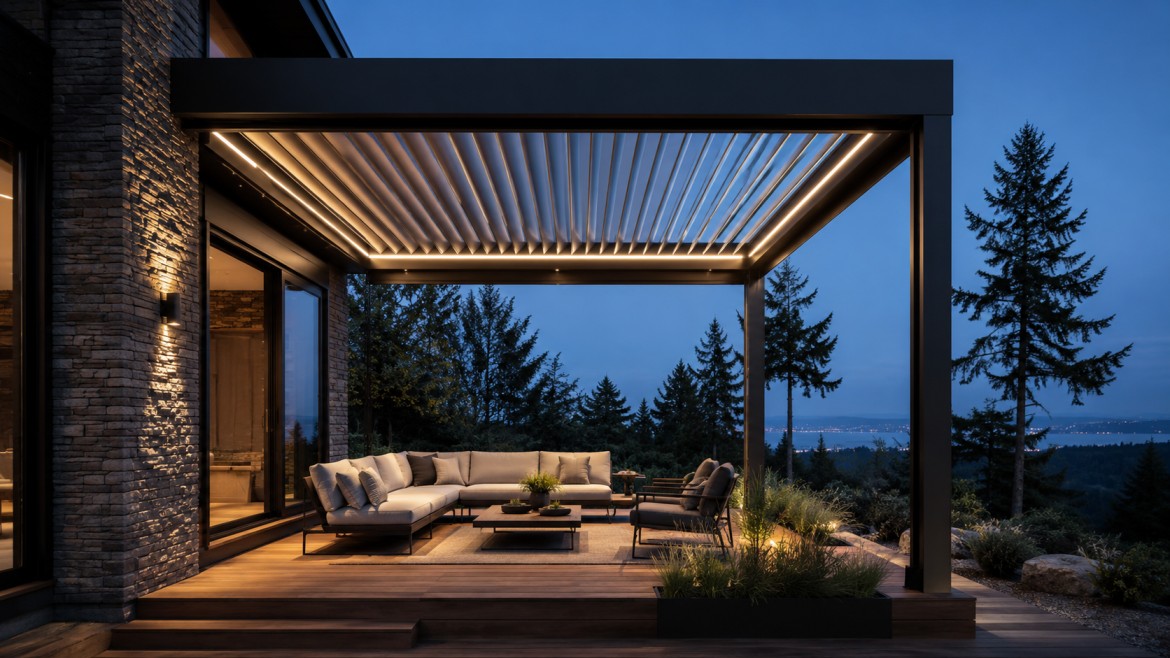
If you’ve got a louvered pergola, the whole point of the adjustable roof is that it closes tight to shed rain. Over time, debris or a minor misalignment can leave a small gap that lets water through. Before winter, run your louvers through a full open-close cycle and watch how they seat. If something looks off — a rattle, a gap, resistance in the motor — get it looked at before you’re relying on it during a November storm.
This is one of the real differences between a patio cover and a louvered pergola: a solid patio cover is set-and-forget once it’s up, while a louvered pergola needs the moving parts to be in good working order to do their job. Worth the five-minute check.
3. Aluminum Doesn’t Need Sealing — But It Does Need a Rinse
One thing we like about aluminum structures on Vancouver Island: unlike a wood pergola, there’s no annual sealing or staining to worry about, and no risk of rot from sitting wet all winter. That’s a big part of why most of what we install is aluminum rather than timber.
That said, a light rinse with a hose before winter helps clear off salt air residue if you’re near the water, along with pollen and grime that’s built up over summer. Skip the pressure washer on painted or powder-coated finishes — a garden hose and a soft brush is all you need.
4. Test Your Heaters and Lighting Before You Need Them
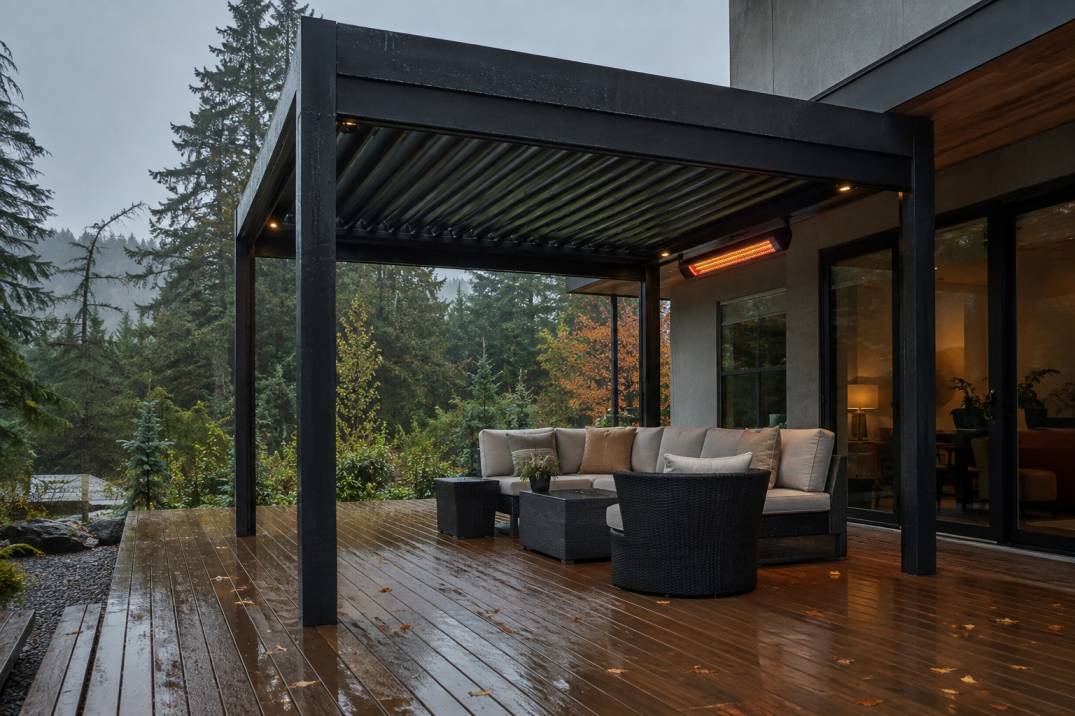
If your setup includes infrared heaters, that’s what turns a fall evening on the patio from “too cold to bother” into actually usable space. Test them before the season starts, not on the first cold night you want to use them. Check that any covers or weatherproofing on outdoor-rated fixtures are still snug, and confirm nothing’s come loose over the summer.
Same goes for lighting — a quick check now beats fumbling with a dead string of lights in the dark in December.
5. Know Your Wind Rating, and Use Your Screens
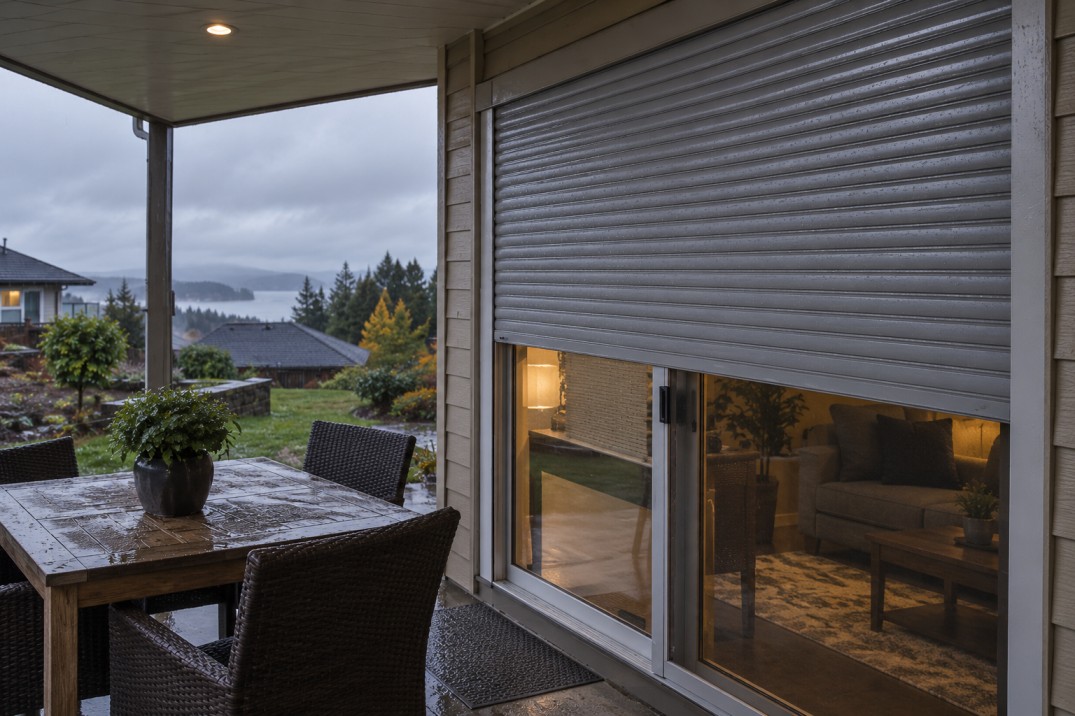
Vancouver Island gets genuine windstorms in the late fall and winter. Aspire’s structures are engineered to hold up to it, but if you’ve got retractable screens installed, closing them down before a forecasted windstorm reduces the load on the structure and protects the screen fabric itself from being battered around.
If you’re not sure what your structure is rated for, or whether your install needs any extra anchoring for an exposed site, that’s a quick conversation — get in touch and we can walk you through it.
6. Look at the Posts and Footings
Give the base of each post a look. On older decks especially, freeze-thaw cycles and constant moisture can shift footings slightly over a few seasons. You’re looking for any new gaps, movement, or pooling water right at the base. Nothing here should require action most years — but it’s the kind of thing that’s much easier to catch early than after a problem develops.
Fall Prep Doesn’t Mean Packing It Away
The nice thing about a proper patio cover or louvered pergola — as opposed to a basic gazebo or a seasonal awning — is that you’re not taking it down for winter. A quick fall check keeps it functioning exactly as it should through the wettest months, and if you’ve got heaters and screens dialled in, you can genuinely keep using the space well past the point most backyards get abandoned for the season.
If you’re weighing whether a patio cover or louvered pergola makes more sense for how you actually use your yard through fall and winter, our comparison guide breaks down the differences. And if you want to see what these structures look like installed on real Vancouver Island homes, our gallery has examples across different styles and settings.
Have questions about maintaining a structure you already have, or want to talk through options for a new install before the wet season hits? Contact us — we’re happy to help either way.